2027 starts here - agriculture training

Your Agricultural Future Starts Now: Why Planning Ahead for 2027 Could Be Your Best Decision Yet

The future of agriculture is filled with possibilities. From modern farming and agricultural technology to wildlife management, agribusiness and food production, exciting career pathways await the next generation. But building a successful future starts long before your first day of studying.

For thousands of Grade 12 learners across South Africa, the final months of 2026 mark an important turning point. Matric examinations are underway, families are discussing study options, and young people are beginning to ask one of life’s biggest questions: What am I going to do next year?

For those considering a future in agriculture, the answer could open doors to an industry that is constantly evolving, creating opportunities and contributing to South Africa’s food security and economic development.

Yet one of the biggest mistakes prospective students make is leaving their study decisions until the last minute.

At Agri Skills Transfer, we encourage learners and parents to begin exploring their options early, ask the right questions and make informed decisions about qualifications, practical training, career opportunities and financial commitments.

Because choosing where to study is about much more than obtaining a qualification. It is about choosing the environment in which you will develop your knowledge, confidence, practical abilities and professional future.

Agriculture Is No Longer Just About Farming

When young people think about agriculture, many still picture a farmer driving a tractor, planting crops or caring for livestock. While these remain essential activities, today’s agricultural industry offers a far broader range of career opportunities.

Modern agriculture combines science, technology, business management, sustainability, food production and innovation.

Graduates with relevant qualifications and practical experience may explore opportunities in livestock production, crop management, agricultural sales, precision farming, irrigation, agricultural technology, conservation and entrepreneurship.

Animal Production and Livestock Management

Opportunities in cattle, sheep, goats, poultry, pigs, animal nutrition, breeding and commercial livestock enterprises.

Plant Production and Crop Management

Careers involving horticulture, crop production, irrigation, soil management, sustainable food production and agricultural research support.


Agricultural Technology and Agribusiness

Opportunities in precision agriculture, agricultural equipment, farm operations, agricultural sales, logistics and farm business management.

Wildlife and Game Management course in 2027

Potential pathways into game farming, wildlife management, conservation support and diversified agricultural enterprises.

Agriculture offers opportunities for people with different interests and talents. Some students thrive in practical outdoor environments, while others discover a passion for management, technology, entrepreneurship or agricultural business.

The important first step is understanding the industry and choosing training that develops the skills needed to participate in it.

Why Parents and Learners Should Start Planning Before the End of 2026

The transition from school to further education is an exciting but sometimes overwhelming experience.

For parents, it often involves important financial decisions, concerns about safety and accommodation, and questions about whether their child will receive the support needed to succeed.

For students, it is about finding an environment where they can develop independence, make friends, discover their strengths and prepare for a meaningful career.

Starting the process early gives families time to consider several important factors.

  • Qualification and career direction: Understand the programme, entry requirements, accreditation status and possible career pathways.
  • Practical training: Establish how much hands-on experience is included and where practical learning takes place.
  • Student accommodation and wellbeing: Investigate campus safety, meals, supervision, learning support and the daily student experience.
  • Financial planning: Compare the total cost of studying, what is included, payment arrangements and available funding options.
  • Application and registration: Understand the documents required, application procedures, deposits and deadlines.

Waiting until January may mean facing unnecessary pressure when institutions are finalising registrations and available places may be limited.

Planning early does not mean making a rushed commitment. It means having the information and time to make a confident decision.

Why Practical Agricultural Training Makes a Difference

Agriculture is an industry where theoretical knowledge and practical ability must work together.

Understanding animal nutrition in a textbook is valuable. Applying that knowledge while caring for livestock provides a different level of learning.

Studying irrigation systems is important. Seeing how water management affects crops in a working agricultural environment helps students understand its practical application.

At Agri Skills Transfer, our philosophy has always been:

Agricultural training with a difference – hands-on practical learning.

Our practical training farm near Cullinan provides students with opportunities to experience different agricultural activities, including cattle, sheep, goats, poultry, pig production, crop production, irrigation and farm operations.

Students are encouraged to connect classroom learning with practical activities and develop an understanding of the daily responsibilities involved in agricultural production.

This approach is intended to help students develop not only technical knowledge but also problem-solving abilities, teamwork, responsibility and workplace readiness.

What Makes Studying at Agri Skills Transfer in 2027 Different?

For families considering our full-time agricultural training experience at the Cullinan farm, the 2027 student package has been designed to provide more than classroom tuition.

We understand that parents want reassurance that their children will be supported, while students want a rewarding learning experience that prepares them for the agricultural industry.

Practical Learning and Industry Exposure

Approximately 1,400–1,600 practical learning hours, depending on the programme, together with structured theory and practical activities, guest lecturers, agricultural visits and industry exposures.

A Supportive Residential Environment

On-campus accommodation, 21 meals per week, laundry services, Wi-Fi and a structured learning timetable are included in the full-time farm package.


Equipment and Protective Clothing

Students receive personal protective equipment, including safety boots and workwear, together with branded clothing and their own toolbox containing practical farm tool.

Additional Learning Experiences

The 2027 full-time package includes 11 additional short-course learning opportunities, Game and Wildlife Management practical exposure, a NAMPO visit and other agricultural activities.

For students following the two-year National Diploma pathway, workplace-integrated learning and placement arrangements during the second year provide further opportunities to gain relevant experience in agricultural working environments.

These experiences are intended to help students make the transition from studying agriculture to understanding the expectations of the workplace.

Choosing the Right Agricultural Qualification for 2027

Not every student has the same goals, circumstances or learning preferences. That is why understanding the available study pathways is essential.

Agri Skills Transfer offers different agricultural learning opportunities, including National Diplomas in Plant Production and Animal Production, as well as the new QCTO National Occupational Certificate in Mixed Crop and Livestock Farming planned for 2027.

Depending on the qualification, students may explore full-time farm-based, blended or distance-learning options.

The new one-year Mixed Crop and Livestock Farming programme is designed to introduce learners to integrated agricultural production, combining knowledge of both crop and livestock farming.

Prospective students should discuss the relevant accreditation, entry requirements, programme structure, duration, costs and practical components with our admissions team before enrolling.

The best programme is not necessarily the one with the most impressive title. It is the one that suits the student’s interests, circumstances, abilities and future ambitions.

Seeing Is Believing: Why Visiting the Farm Matters


A prospectus can explain what an institution offers. A website can introduce programmes and facilities. But neither can fully replace the experience of visiting a campus and seeing the learning environment for yourself.

For parents, a campus visit provides an opportunity to assess the facilities, ask questions about accommodation and student support, and understand how the institution operates.

For prospective students, it is an opportunity to picture their future.

Imagine walking through the farm, meeting the team, exploring the practical training facilities and discovering what a typical day as an agricultural student could look like.

You can ask about career pathways, study options, practical training, student life, financial arrangements and the application process.

Most importantly, you can decide whether this is an environment where you would feel comfortable learning and growing.

Your Final Opportunity in 2026: Join Our Last Open Day

AGRI SKILLS TRANSFER | FINAL OPEN DAY 2026

Saturday, 14 November 2026

09:00 – 12:00

Agri Skills Transfer Practical Training Farm, Cullinan

Who should attend?

Grade 11 and 12 learners, matriculants, parents, guardians, school leavers and anyone considering agricultural studies in 2027.

During your visit, you can explore the training farm, learn about qualifications and practical experiences, discuss accommodation and financial options, and speak to our team about completing your enrolment.

Booking is essential

012 002 3723

WhatsApp: 076 203 3816

Reserve your place for the final Open Day of 2026.

Explore Agri Skills Transfer

Already Received a Quotation? Take the Next Step

For prospective students and parents who have already visited Agri Skills Transfer, received programme information or requested a quotation, now is an excellent time to finalise the next step.

Our admissions team can help you confirm your preferred programme, complete outstanding application documentation and understand the registration fee and deposit required to secure your place.

Families who need financial assistance with planning their studies can also enquire about available payment arrangements and external education finance options.

Securing a study place is an important commitment, and we encourage families to make sure they understand the full financial arrangements before completing registration.

Your Future Deserves More Than a Last-Minute Decision

The agricultural industry needs knowledgeable, adaptable and practically skilled people who are prepared to contribute to the future of food production and agricultural development.

Whether your ambition is to manage a farm, work with animals, develop sustainable crop production systems, explore agricultural technology, become an entrepreneur or pursue a career connected to conservation, your journey begins with the choices you make today.

Parents, give your children the opportunity to explore their interests and make informed decisions.

Students, ask questions, investigate your options and take responsibility for planning your future.

The opportunities of 2027 are approaching. Don’t wait until the new year to start thinking about them.

At Agri Skills Transfer, we look forward to welcoming the next generation of agricultural professionals, innovators and entrepreneurs.

Make 2027 the Year You Start Building Your Agricultural Future

Your future doesn’t begin on the first day of class. It begins with the decision to take the first step.

Join us on Saturday, 14 November 2026, for our final Open Day of the year. Come and experience the farm, meet our team, discover your study options and take the next step towards enrolment.

SEEING IS BELIEVING – COME AND EXPERIENCE AGRICULTURAL TRAINING WITH A DIFFERENCE!

Call: 012 002 3723

WhatsApp: 076 203 3816

Email: admin@agriskills.net

Website: www.agriskills.net

Agri Skills Transfer – Agricultural Training with a Difference. Hands-on Practical Learning.


agriculture is changing

Agriculture Is Changing. Are You Ready to Be Part of Its Future?

Discover how scientific knowledge, technology and practical agricultural training are opening new opportunities for the next generation at Agri Skills Transfer.

Agriculture is no longer simply about working the land. It is about understanding the land, managing resources intelligently, using technology to improve productivity and making decisions that shape the future of food production.

From precision farming and satellite technology to artificial intelligence, advanced machinery and sustainable farming practices, the agricultural sector is evolving rapidly. The skills needed to succeed in this industry are changing too.

For young people considering their future careers, this presents an exciting opportunity. Agriculture offers a world of possibilities for those who are curious, practical, innovative and ready to learn.

At Agri Skills Transfer, we believe the future of agriculture starts with equipping people with the right knowledge, technical expertise and hands-on experience to meet the demands of a modern agricultural industry.

Modern farming needs a new generation of skilled professionals

Think about how much technology has transformed the way we live. Farming is experiencing the same evolution.

Today’s agricultural professionals increasingly need to understand how machinery, digital systems, scientific information and practical farming knowledge work together.

A modern farmer may use satellite images to assess crop performance, digital tools to monitor livestock, soil testing technology to understand soil fertility and farm management software to plan production and manage operational costs.

These are not simply technologies for the future. They are increasingly part of the agricultural environment in which today’s students will build their careers.

The opportunity is to become part of a generation that understands both the practical realities of farming and the technical knowledge that makes agricultural businesses more productive, efficient and sustainable.

Agriculture meets technology: What is changing?

  1. Precision farming and advanced machinery

Mechanisation has transformed agricultural production. Modern tractors, harvesters and spraying equipment increasingly incorporate GPS guidance, automated systems and precision technology.

These systems help agricultural producers work more accurately, manage inputs more efficiently and improve the consistency of farming operations.

For example, precision farming allows seed, fertiliser and other inputs to be applied according to the specific requirements of different areas of a field, rather than treating every part of the land in exactly the same way.

Understanding these technologies requires more than operating machinery. It requires technical knowledge, practical training and the ability to interpret information and make informed decisions.

For aspiring agricultural professionals, developing these skills can provide a valuable foundation for working in modern crop production, farm operations and agricultural services.

  1. Data is becoming one of farming’s most valuable resources

Successful farming has always depended on observation, experience and good decision-making.

Today, technology gives farmers access to even more information to support those decisions.

Farm management software can help producers organise information about finances, inventory, equipment, production activities and operational planning.

Precision farming systems use information gathered from GPS technology, sensors and other digital resources to monitor crop conditions and identify areas requiring attention.

When agricultural professionals understand how to use this information, they can make more informed decisions about irrigation, fertilisation, production planning and resource allocation.

The ability to work with agricultural data is becoming an important skill for anyone interested in the business and management side of farming.

  1. Understanding soil health and sustainable production

Healthy soil is the foundation of successful crop production.

Modern soil testing technologies are helping farmers gain a deeper understanding of soil fertility, organic matter and other indicators of soil health.

Portable diagnostic instruments and advanced testing methods can provide information that helps producers make better decisions about soil management and nutrient requirements.

This knowledge is particularly important as agricultural businesses look for ways to improve productivity while protecting natural resources.

Students who understand soil fertility, plant nutrition and sustainable production practices will be better equipped to contribute to the long-term success of agricultural enterprises.

  1. Satellite images, drones and artificial intelligence

Imagine being able to assess the condition of an entire field from above.

Satellite imagery and drone technology allow agricultural producers to monitor crops, identify variations in plant growth and detect potential problems such as irrigation shortfalls, nutrient deficiencies or signs of disease.

These technologies can help farmers identify where intervention may be needed before a problem affects a larger area.

Artificial intelligence and digital analysis are also creating new opportunities to interpret agricultural information and support more precise decisions.

As these technologies become increasingly integrated into farming, agricultural professionals will need to understand how to use the information they provide and apply it in practical farming situations.

The future belongs to people who are willing to learn, adapt and embrace new ways of working.

Why practical agricultural training matters more than ever

Technology is changing agriculture, but it does not replace the importance of practical farming knowledge.

A digital system can provide information about soil conditions, but agricultural professionals still need to understand what that information means for crop production.

A farm management platform can assist with planning, but someone must understand the realities of running an agricultural enterprise.

Machinery may become more advanced, but safe operation, maintenance awareness and sound practical judgement remain essential.

This is why agricultural education must connect scientific knowledge with real-world experience.

At Agri Skills Transfer, students have the opportunity to learn about agriculture through practical training, exposure to farming activities and an understanding of how agricultural production works in real life.

Established in 2004, Agri Skills Transfer has been committed to agricultural training for more than two decades. Its approach recognises that preparing students for the agricultural sector means developing knowledge and skills that can be applied beyond the classroom.

Our practical training environment at Cullinan Farm Training Centre gives students exposure to agricultural production and farming operations, helping them understand the relationship between theory and the everyday realities of agriculture.

You do not simply need to study agriculture. You need to understand how agriculture works.

Your agricultural career could take you further than you think

One of the most exciting aspects of agriculture is the variety of opportunities it offers.

Agriculture includes much more than traditional farming. It encompasses crop production, livestock management, agricultural technology, farm management, agricultural services and the businesses that support food production.

Depending on your interests, agricultural training can help you explore pathways towards:

  • Crop production and plant management.
  • Livestock production and animal management.
  • Agricultural farm operations and management.
  • Agricultural services and technical support.
  • Farming entrepreneurship and agricultural business development.
  • Further learning in emerging agricultural technologies.

The industry needs people who can combine practical experience with problem-solving, responsibility, communication and a willingness to keep learning.

Whether your ambition is to manage a farming operation, develop your own agricultural enterprise or contribute to the agricultural businesses supporting producers, building a strong agricultural skills foundation is an important first step.

Preparing for the next chapter of agriculture at Agri Skills Transfer

The agricultural sector is moving forward, and agricultural education must move forward with it.

As part of our commitment to preparing students for changing industry needs, Agri Skills Transfer continues to focus on practical agricultural training and opportunities to understand modern farming practices.

For prospective students considering 2027, this is an opportunity to explore agricultural studies that connect learning with the real world.

Our agricultural training programmes include opportunities to develop knowledge in plant production, animal production and agricultural management, with different study options available to suit different learning needs.

Students can explore full-time, blended and distance-learning pathways, depending on the programme and its requirements.

The important question is not whether agriculture will change. It already is.

The question is whether you will be equipped to take advantage of the opportunities that change creates.

2027: Your future in agriculture starts here

If you are passionate about working with nature, interested in technology, curious about business or excited by the possibility of building a career in agriculture, now is the time to investigate your options.

Agriculture needs a new generation of skilled people who can think critically, work practically and embrace innovation.

At Agri Skills Transfer, we want to help you develop the knowledge and skills to take your next step towards a future in this dynamic industry.

Do not just watch agriculture change. Be part of the generation that drives it forward.

Explore your agricultural study options for 2027 and find out which programme could be right for you.

Contact Agri Skills Transfer today:

Phone: 012 002 3723

Email: admin@agriskills.net

Website: agriskills.net

Agri Skills Transfer — Learn. Grow. Prosper.

Where Agriculture Meets Opportunity: Agri Skills Transfer Prepares the Next Generation

Newsletter: 9 October 2026

For students considering a career in agriculture, the question is no longer simply where to study. It is where to gain the practical experience, industry exposure and skills needed to make a meaningful contribution to South Africa’s agricultural sector.

At Agri Skills Transfer, the answer is increasingly found where the theory meets the soil.

As the institution prepares for its 2027 intake, it is expanding its programmes, facilities and industry partnerships, with a clear focus on producing graduates who understand agriculture not only as a subject, but as a production system, a business and an industry filled with opportunity.

Based in Groenkloof, Pretoria, with its practical training environment at the Cullinan Farm Training Centre, Agri Skills Transfer offers National Diploma programmes in Animal Production and Plant Production. Students are exposed to practical farming activities alongside their academic studies, giving them an opportunity to see how production decisions work in real agricultural environments.

Building for the future

A major development ahead of the 2027 academic year is Agri Skills Transfer’s new building and residential facilities. The development is intended to strengthen the environment in which students live, learn and prepare for careers in agriculture.

The institution is also expanding its occupational training offering with a new QCTO Higher Occupational Certificate in Mixed Crop and Livestock Farming at NQF Level 5.

The programme reflects the realities of modern South African agriculture, where successful farming increasingly requires an understanding of crop and livestock production, resource management and the integration of different agricultural enterprises.

Another exciting addition to the programme portfolio is Game and Wildlife Management, opening another pathway for students interested in South Africa’s established and growing game-farming and wildlife sector.

“The future of agriculture belongs to people who can combine knowledge with practical ability and understand the realities of production.”

— Laurika du Bois, Marketing and Communication Manager, Agri Skills Transfer

From the classroom to commercial agriculture

For students entering the National Diploma programmes in Animal Production and Plant Production, practical exposure is an increasingly important part of the learning journey.

Agri Skills Transfer is introducing a placement guarantee for second-year students, supported by agreements and contracts with farms prepared to host students for relevant workplace exposure.

The objective is to place students in environments where they can gain meaningful industry experience related to their fields of study. This creates an opportunity for students to develop practical competence, professional networks and a better understanding of the expectations of employers and commercial farming operations.

It also means students can begin building their professional networks before they graduate.

A practical farm that functions as a learning laboratory

One of the greatest advantages of practical agricultural education is the ability to learn from projects while they are happening.

At the Cullinan training farm, students are exposed to crop-production activities, including maize and open-field planting. These projects provide an opportunity to observe agricultural production beyond the textbook — from preparation and planting through to crop development and management.

Livestock activities similarly provide opportunities to explore production systems and emerging agricultural practices.

Agri Skills Transfer is working with industry partners including Dan Bred in pig production and Design Biologix in beef cattle and dairy, while also developing relationships with organisations such as PICRSA and Bierman Poultry.

These relationships bring an important dimension to agricultural education. Students can see how genetics, technology, production systems, animal management and specialist knowledge are applied in real agricultural environments.

This is where a practical farm becomes more than a training facility. It becomes a learning laboratory where students can observe, question, experiment and develop the confidence to apply their knowledge.

Mega Open Day: Experience agriculture first-hand

On Saturday, 10 October 2026, Agri Skills Transfer will open its doors for its Mega Open Day, giving prospective students and parents the opportunity to experience the institution and its practical approach first-hand.

The event will showcase the training environment, programmes, facilities and opportunities available to students preparing for the 2027 academic year.

Industry partners and members of the media will also attend, providing an opportunity to showcase the growing network connecting Agri Skills Transfer with the agricultural sector.

For prospective students, the Open Day is about more than choosing a qualification. It is an opportunity to see the environment in which they could spend the next stage of their education — and to start imagining where that qualification could take them.

More than a qualification — a complete agricultural experience

For 2027, students joining Agri Skills Transfer receive far more than a qualification. The offering has been designed as a complete practical agricultural learning experience, combining academic studies with equipment, clothing, accommodation, meals, practical exposure and industry opportunities.

Students receive a PPE set consisting of a branded jacket and trousers, safety boots, gumboots, a field hat, safety goggles, gloves and dust masks, ensuring they are equipped for practical work on the farm.

Students will also receive an official branded field shirt for NAMPO and other industry events, as well as three branded work shirts for practical training.

The package includes all course material and practical learning opportunities, supported by guest lecturers who bring additional industry knowledge and experience into the learning environment.

Students will also receive a toolbox containing the essential farm tools required for their practical training, allowing them to develop hands-on skills using equipment relevant to agricultural working environments.

For residential students, accommodation forms an important part of the experience. Students will live in dormitory-style residential facilities with en-suite facilities and a kitchenette, supported by Wi-Fi and laundry facilities. Meals are provided Monday to Sunday, creating an environment where students can focus on their studies, practical training and personal development.

The 2027 package also includes short courses valued at more than R40 000, together with the new Game and Wildlife Management course, giving students the opportunity to broaden their skills beyond their core qualification.

Importantly, second-year National Diploma students will have access to a guaranteed practical placement in the agricultural industry, through farms with which Agri Skills Transfer has agreements and contracts. This provides students with an opportunity to gain relevant workplace experience and exposure to commercial farming practices before completing their studies.

Students will also participate in NAMPO visits and other industry exposure opportunities, connecting them with leading agricultural companies, technologies, equipment, production systems and best practices.

Agriculture as a career — not just a qualification

South Africa needs a new generation of agricultural professionals who understand production, technology, business and the changing demands of the sector.

Agri Skills Transfer’s 2027 offering is built around that principle:

Learn the theory. Experience the practical. Connect with industry. Build the confidence to create your future in agriculture.

The institution’s message to prospective students is simple: agriculture offers far more possibilities than many young people realise.

It can lead to careers in crop production, livestock, agribusiness, farm management, agricultural sales and services, game and wildlife management, entrepreneurship and many other areas across the agricultural value chain.

The opportunity is to start with a qualification — and grow it into a career, a business and a future.

At Agri Skills Transfer, the classroom is only the beginning. The farm is the laboratory, industry is the teacher, and the future is the destination.

Ready to build your future in agriculture?

Agri Skills Transfer

🌐 agriskills.net

📞 012 002 3723

📱 WhatsApp: 076 203 3816

2027 enrolment enquiries are now open.

Get started with your Agriculture journey here: https://agriskills.net/national-diploma/

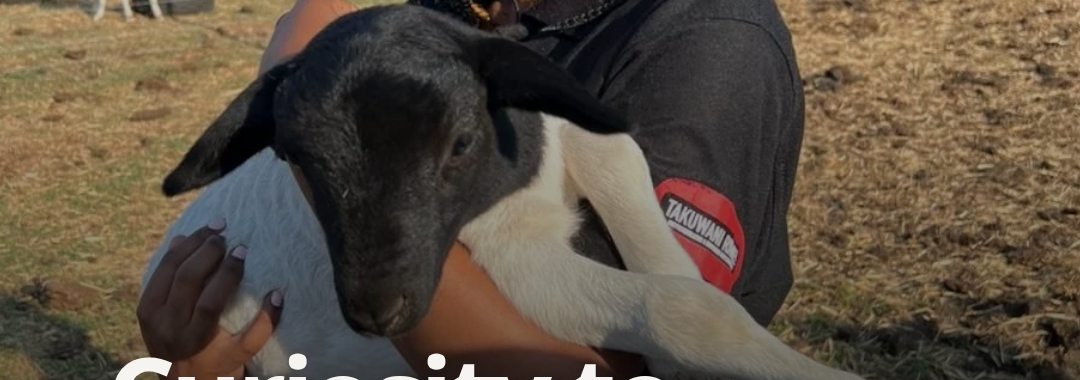
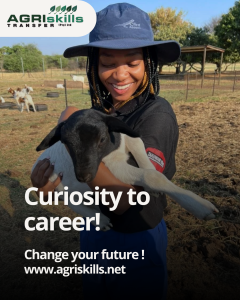
From Curiosity to Career: One Question Could Change Your Future

“What if I could actually build a career in agriculture?”

It sounds like a simple question.

But sometimes, the simplest questions can open the door to an entirely different future.

Choosing what to do after school can feel like a huge decision. There are qualifications to consider, careers to research, financial decisions to make and, often, the expectations of family and friends to navigate.

And somewhere in all of that, there is one question that can easily get lost:

What am I actually interested in?

You may already know exactly what you want to do. Perhaps you have dreamed about becoming a doctor, engineer, entrepreneur, teacher or something completely different for years.

But perhaps you are still figuring it out.

Maybe you have several interests but no clear direction. Maybe you are scrolling through career options wondering which one could actually be right for you.

And that is okay.

You do not have to have your entire future mapped out before you take your first step.

Sometimes, a career begins with nothing more than curiosity.

What if agriculture is bigger than you think?

When people hear the word agriculture, they often picture tractors moving through fields, farmers working with livestock or crops growing in rows.

And yes, those things are an important part of agriculture.

But modern agriculture is so much more.

Agriculture is a complex and constantly evolving industry that brings together business, technology, science, production, management, marketing, innovation, sustainability and entrepreneurship.

It is about producing food. It is about managing natural resources. It is about understanding markets, making decisions, solving problems and finding better ways to do things.

It is also an industry that continues to evolve as technology, climate, consumer demands and food systems change.

Behind every crop, animal, agricultural product and food supply chain are people with different skills, responsibilities and career paths.

Which raises a more interesting question:

Where could YOU fit into agriculture?

Perhaps you have always been fascinated by animals.

Maybe you enjoy growing things and want to understand how plants, soil and production work together.

Perhaps machinery and technology catch your attention.

Maybe business is your passion and you can see yourself managing an agricultural enterprise.

Or perhaps you are interested in entrepreneurship and dream of building something of your own.

And maybe, honestly, you have absolutely no idea yet.

That is where exploration becomes important.

Don’t just learn about agriculture. Experience it.

There is a significant difference between learning about agriculture and actually experiencing it.

You can read about livestock production in a textbook. But standing alongside animals, observing their behaviour and understanding the practical decisions involved can change the way you understand what you have learned.

You can study crop production in a classroom. But seeing how soil, weather, water, pests, planting decisions and production systems interact brings those concepts to life.

You can learn about agricultural management. But being exposed to the decisions involved in running a real agricultural operation gives you a different perspective on what it takes to make an enterprise work.

This is where practical learning becomes powerful.

Experience gives knowledge context.

It helps turn something theoretical into something you can see, understand and apply.

At Agri Skills Transfer, the focus is on connecting education with the realities of agriculture. Learning is not simply about remembering information for an assessment. It is about developing an understanding of how agricultural knowledge and skills are applied in the real world.

Because agriculture is an industry where you need more than knowledge.

You need skills, confidence, adaptability and practical understanding.

Curiosity can become confidence

Think about how you learned something you are good at today.

You probably did not know how to do it perfectly the first time.

You started by asking questions.

You watched.

You tried.

You made mistakes.

You learned from them.

You tried again.

And slowly, something that once seemed unfamiliar became something you understood.

That is how curiosity can become competence.

It starts with a question.

Then comes exploration.

Exploration leads to learning.

Learning develops skills.

Skills build confidence.

And confidence can create opportunities.

This is why choosing a career should not only be about asking, “What qualification should I get?”

It should also be about asking:

“What do I want to learn?”

“What am I interested in?”

“What kind of work would I enjoy doing?”

“What problems would I like to solve?”

And perhaps most importantly:

“Where could these skills take me?”

Your first step could lead somewhere unexpected

One of the most exciting things about agriculture is that there is no single definition of an agricultural career.

You might begin with an interest in animal production and discover that you are passionate about managing a farming enterprise.

You might start with plant production and develop an interest in agribusiness, sustainability or agricultural technology.

You might discover that your real strength is working with people, managing operations or developing a business.

You may even discover opportunities and career possibilities that you had never considered before.

That is the value of exploring.

Your first step does not have to determine your entire future.

It simply needs to move you forward.

Your interests can change.

Your skills can grow.

Your ambitions can become bigger.

And sometimes, the career you eventually build is very different from the one you imagined when you started.

That is not failure.

That is growth.

So, could agriculture be your future?

You do not need to know exactly where you will be in ten years.

You do not need to have every answer today.

You simply need to be willing to ask the question.

Could agriculture be my future?

If the answer is maybe, that is enough to start exploring.

Find out what the industry looks like.

Discover the different career possibilities.

Talk to people working in agriculture.

Visit a training environment.

Experience the practical side of the industry.

Ask questions.

Try something new.

And see where your curiosity takes you.

Because a career is not built in one decision.

It is built through learning, experience, skills, choices and opportunities.

And sometimes, the first opportunity is simply giving yourself permission to explore something you had never seriously considered before.

🌱 Your future is worth exploring.

At Agri Skills Transfer, we believe the journey into agriculture should be about more than simply obtaining a qualification.

It should be about discovering possibilities, developing practical skills and gaining the confidence to take your next step.

Whether your interest is in animal production, plant production, agricultural business, management, technology or entrepreneurship, there is a world of possibilities waiting to be explored.

So, before you decide that agriculture is “not for you”, take a closer look.

You might be surprised by what you discover.

What if your career starts with curiosity?

Explore the Agri Skills Transfer 2027 study options and discover where your interests could take you.

🚜 Don’t just study agriculture. Experience it. Live it. Build your future in it.

👉 Start exploring your future:
https://agriskills.net/national-diploma/

One question could change your direction.
Why not ask it?

Email us at admin@agriskills.net or Whatsapp 076 203 3816 or call us 012 051 0373